
Reshaping AI Governance
Lead innovation, reduce costs, and turn ideas into impact with the AI governance platform from oxethica.









We work with some of the best partners in the industry




Why AI Governance Matters
In today's rapidly evolving technological landscape, AI governance is not just a best practice, it's a necessity. It ensures AI systems are developed and deployed responsibly, ethically, and in compliance with regulations. By implementing robust AI governance, organisations can mitigate risks, build trust, and unlock the full potential of AI while safeguarding their values and reputation.

Stop risk before it turns into cost
Untracked AI and poor oversight lead to fines, security incidents, and expensive remediation.

Cut complexity, save time
Centralised oversight replaces fragmented processes, reducing manual effort and speeding up reviews, audits, and approvals.

Build trust with regulators and stakeholders
Transparent documentation and clear accountability make it easier to demonstrate compliance and responsible AI use.

Stay competitive as regulations evolve
Proactive governance keeps your organisation compliant, adaptable, and ahead in a fast-changing regulatory landscape.
An AI Governance Platform for Frictionless Compliance
We turn regulation into opportunity by simplifying complexity, automating assessments, and putting control back in your hands without the legal jargon or overhead.
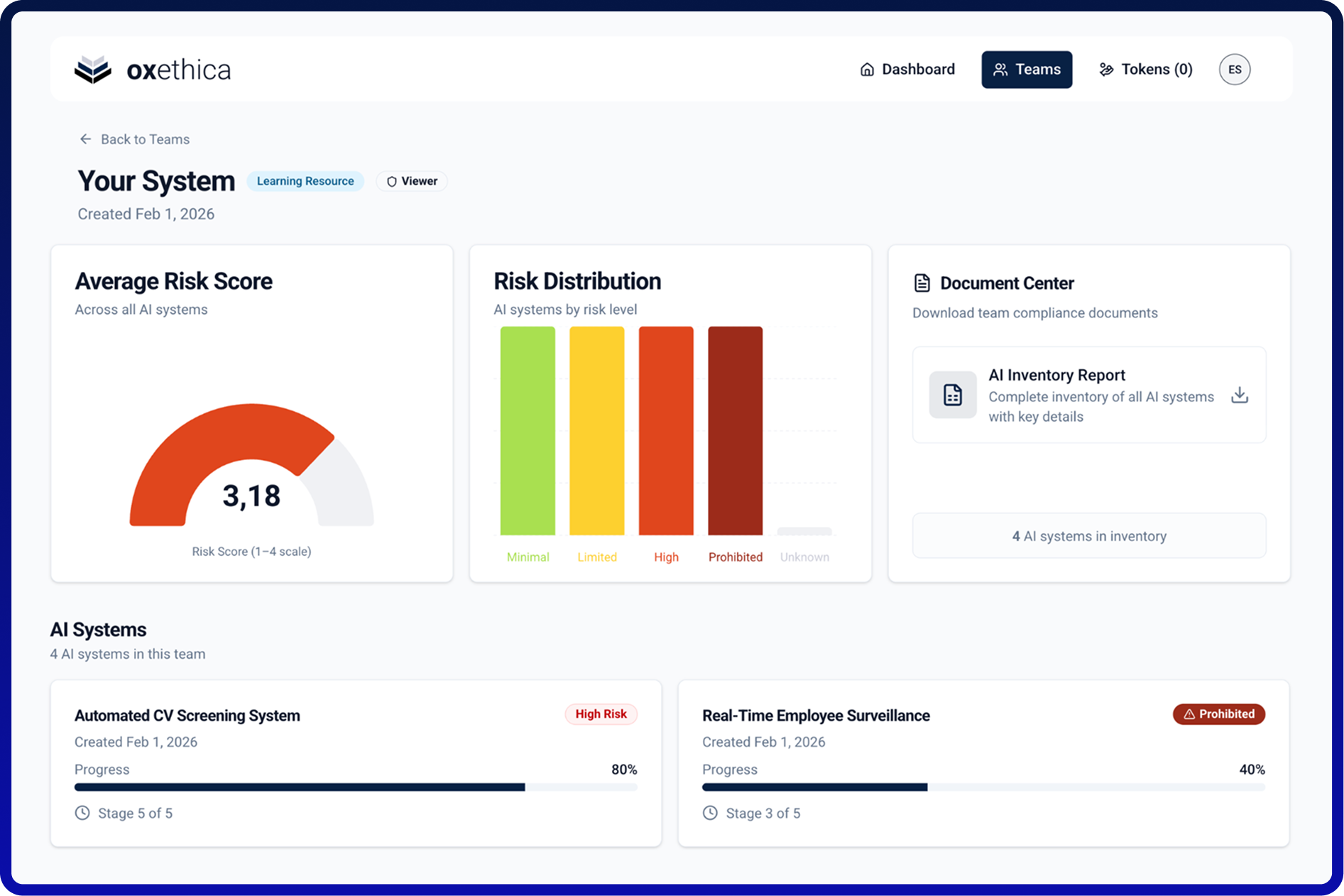
Effortless AI Inventory
Get instant visibility into all your AI systems. One place to monitor, manage, and scale governance across your organisation.
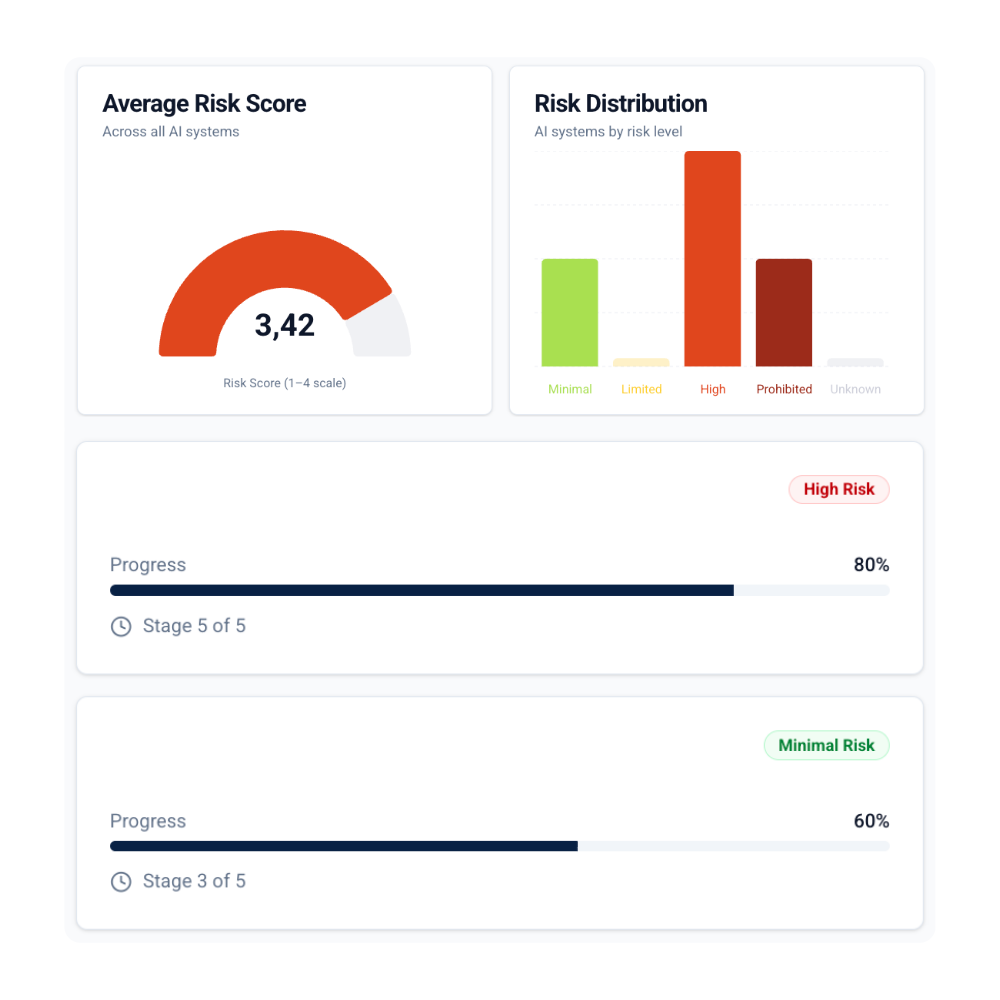
Focused Risk Insights
Zoom in on individual AI systems to understand and manage their unique risk profiles.
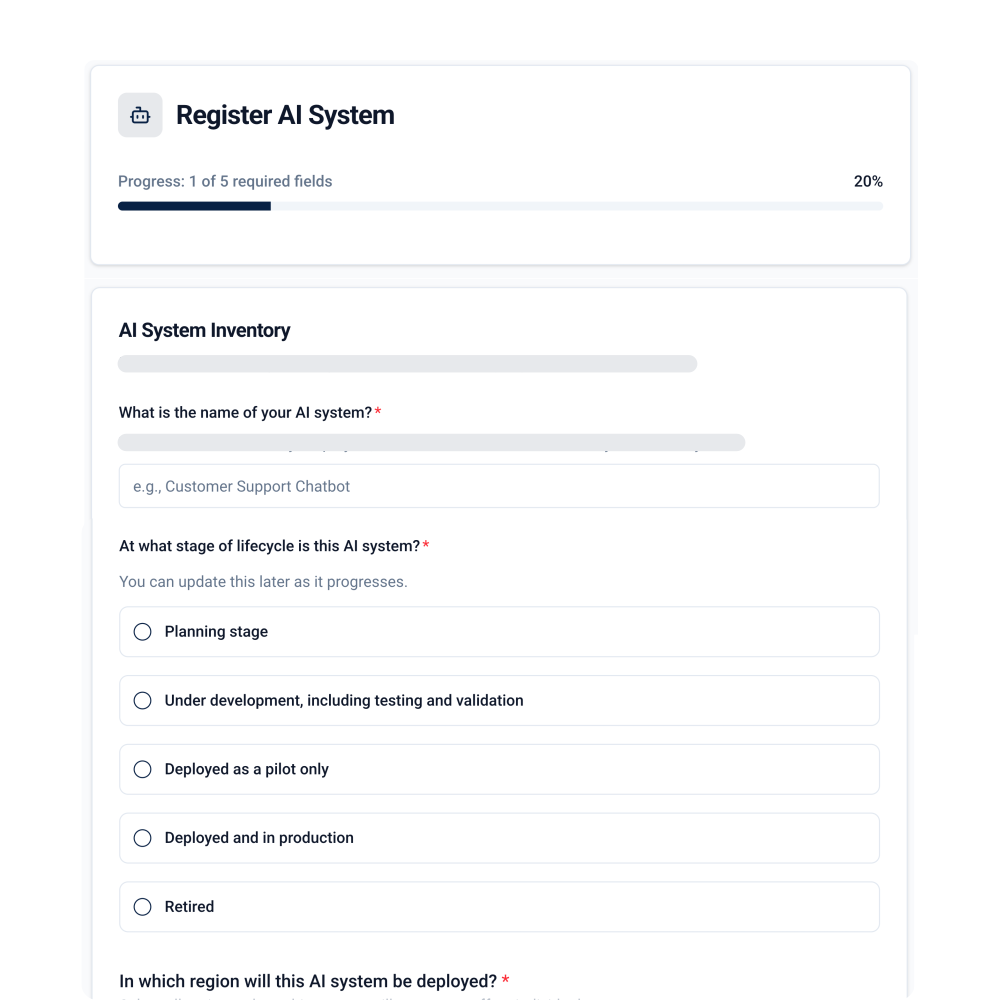
Streamlined Compliance Checks
Cut through complexity with smart, step-by-step questionnaires. Built to align with standards and reduce manual effort.
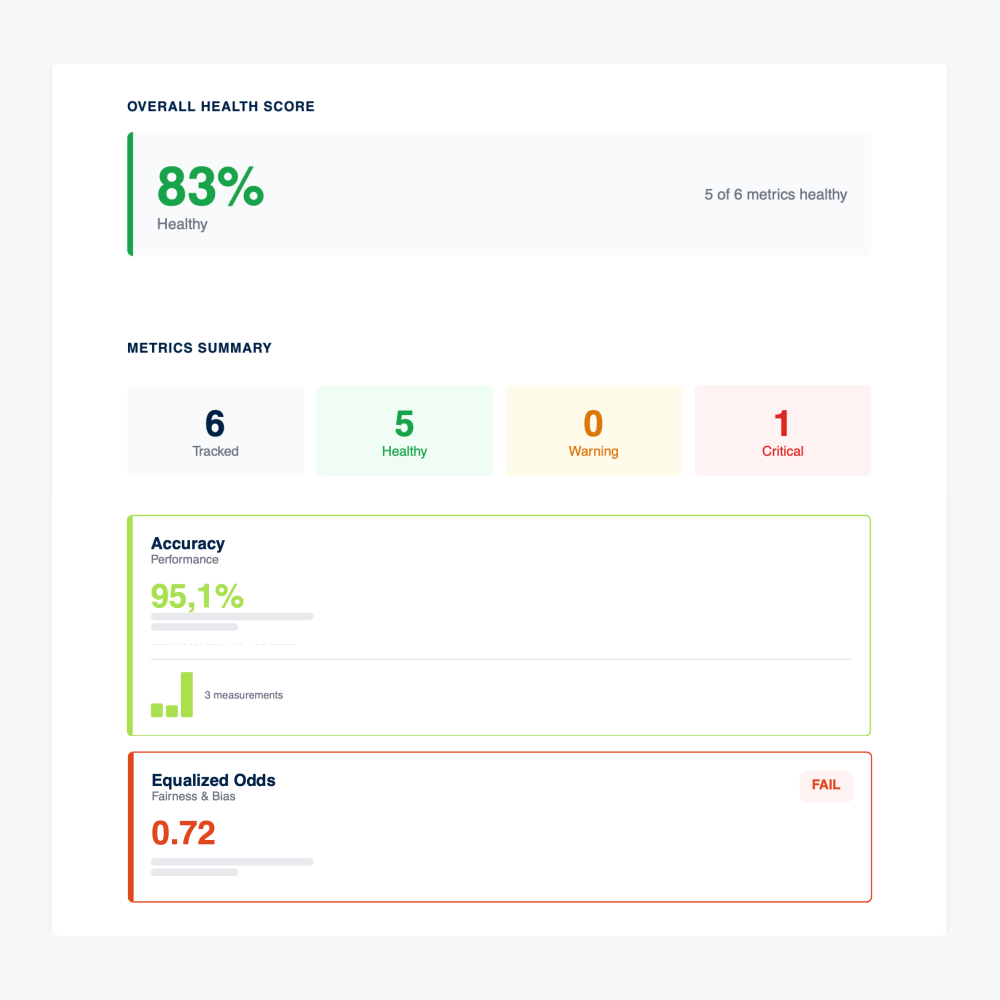
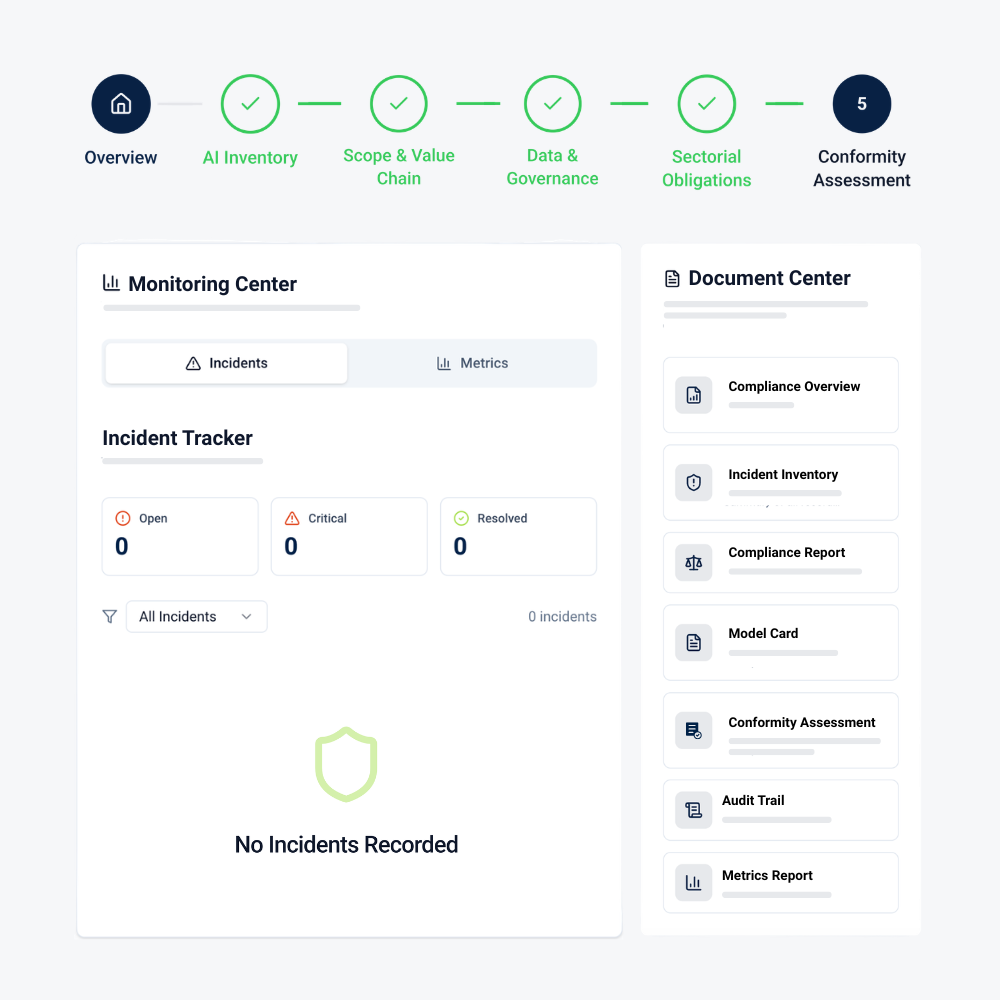
Action-Ready Documentation
Model cards deliver clear, structured outputs to support decisions, audits, and transparency for your organisation - and ready to send as a PDF to AI regulators.
Why Choose oxethica
oxethica offers a unified platform that simplifies AI governance, ensuring ethical, responsible, and compliant AI development, so you can mitigate risks, build trust, and maximise AI's potential.

Streamline Governance
No more guesswork. Manage AI oversight and compliance from one platform to stay efficient, reduce risk, and focus on what matters.

Reduce Costs
Spend less, scale better. Automate audits, risk checks, and reporting while controlling spend with flexible, pay-as-you-go pricing.

Stay Ahead
Navigate change with confidence. Get real-time guidance as laws and AI regulations evolve to stay compliant and ahead of the competition.
Testimonials
Teams across industries trust oxethica to simplify AI governance, reduce risk, and turn compliance into a strategic advantage. Here’s how they’re putting clarity and control into practice.







Our Plans
Explore our range of plans designed to meet diverse needs, from individuals just starting with AI to teams managing complex systems.
Our Latest Blog Articles
Explore our latest insights and trends in AI governance, offering valuable perspectives for both beginners and experts.



AI Governance Platform FAQs
Discover the essentials of AI governance and how it can transform your business operations. Our insights provide clarity on navigating the complexities of AI implementation.
oxethica ensures AI compliance through a robust and comprehensive approach that integrates cutting-edge research with adherence to regulatory standards. We align our practices with the EU Artificial Intelligence Act, building on the continuous improvement of our Conformity Assessment Procedure for AI Systems (capAI) to stay updated with regulatory changes. Our AI Governance Platform provides a comprehensive set of tools for managing AI systems transparently and effectively. We also consider compliance mandates with closely related and sectoral regulations such as GDPR and the Product Safety Directive.
In addition to legal compliance, we provide a procedure for AI auditing, including rigorous testing and validation to ensure the AI outputs are robust. Additionally, we assess AI systems against your firm's ethical norms and values to ensure they are ethically sound. By integrating these practices, oxethica supports organizations in building trustworthy AI systems and achieving efficient regulatory compliance with the most stringent AI regulations.
AI governance and data governance are interrelated but distinct concepts. Data is a fundamental component of AI: AI systems are trained on large quantities of data to make predictions and generate new content. Data governance focuses specifically on managing the availability, usability, integrity, and security of such data within an organization. Sound data governance thus is a critical foundation for effective AI governance; without good quality and representative data there cannot be a good AI system. AI governance builds upon data governance principles but extends further to address the unique challenges and opportunities presented by artificial intelligence technologies.
AI governance matters for both society and organisations. At the societal level, it plays a critical role in ensuring that AI systems are developed and used in a manner that are trustworthy – meaning they are legally compliant, technically robust, and adhere to ethical norms and values that society holds.
For organisations, effective AI governance is a safeguard against numerous risks and dangers. Without proper governance, organisations risk perpetuating algorithmic biases, violating privacy and intellectual property rights, or make decisions that lack transparency or accountability. Such missteps can result in significant financial losses and severe reputational damage.
AI governance refers to the check and balances designed to guide the responsible development, deployment, and use of AI systems. It comprises ethical guidelines, legal regulations, AI audits and best practices aimed at ensuring AI systems align with ethical values and social norms. Effective AI governance addresses key areas such as transparency, accountability, oversight, fairness, privacy and safety. By fostering responsible practices, AI governance seeks to safeguard against potential risks and dangers of AI such as algorithmic bias, discrimination, and unintended consequences, ultimately building public trust and confidence in AI systems.
Artificial Intelligence (AI) systems are sophisticated computer programs designed to mimic human intelligence and decision-making processes. They function by synthetising patterns in large datasets to generate predictions, recommendations, and content. AI systems can learn from data and improve their performance over time. Examples include large language models, foundation models, and various machine learning models.
While the ultimate goal for some researchers is to develop Artificial General Intelligence (AGI) – software with human-like intelligence across a wide range of cognitive functions – most current AI systems are considered narrow AI. These specialized systems can operate with varying degrees of independence, from fully automated processes to providing suggestions for human review. These systems excel in specific domains but lack the versatility of human intelligence. Nevertheless, they have proven helpful in diverse fields such as natural language processing, computer vision, robotics, and data analysis.